
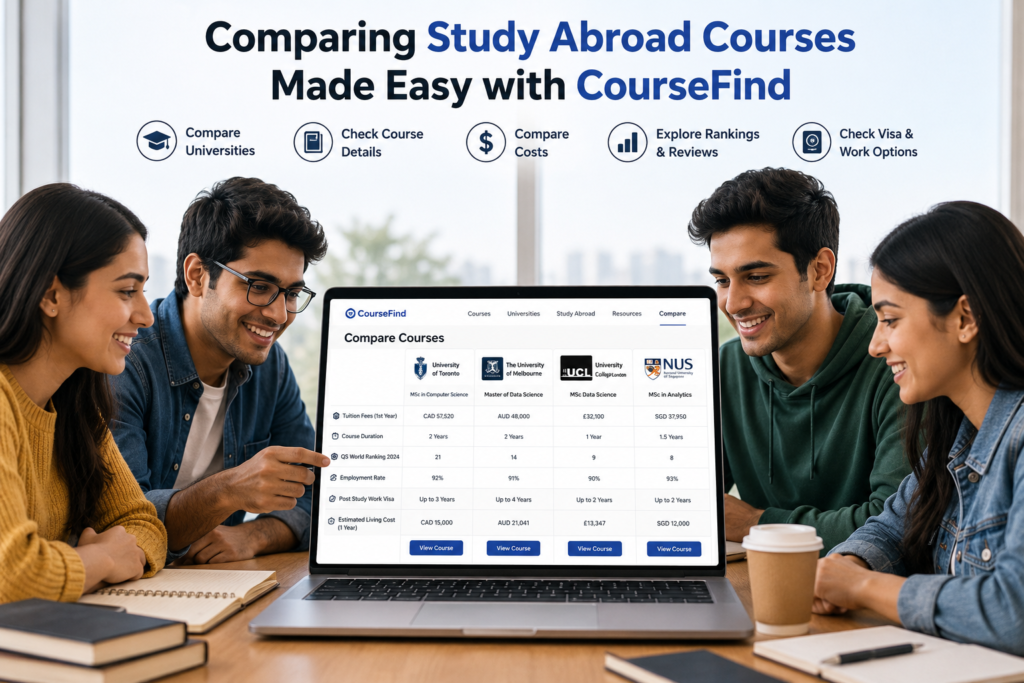
Compare study abroad courses before applying, because choosing the right course is one of the biggest decisions that can shape your academic journey and career. Many students select universities only because of global rankings or popularity, but later realize that the course structure, fees, career opportunities, or job outcomes do not match their expectations.
A university may have an excellent reputation, but the real question is: Does this course fit your goals, budget, skills, and future career plans?
This guide will help you understand how to compare study abroad courses effectively and make a confident decision before investing your time and money
Why You Should Compare Study Abroad Courses Before Applying
Studying abroad is a major investment. Apart from tuition fees, students also spend money on accommodation, travel, insurance, and daily expenses. Choosing the wrong course can lead to unnecessary financial pressure and career challenges.
When you compare study abroad courses, you get a clearer understanding of:
- Course quality and curriculum
- University reputation
- Total study cost
- Career opportunities
- Visa and post-study options
- Student support services
According to IDP Education, university rankings can help students shortlist options, but factors like course structure, location, cost, and career outcomes are equally important.
How to Compare Study Abroad Courses Step by Step
1. Compare Study Abroad Courses Based on Accreditation and Recognition
Before looking at rankings, check whether the course is officially accredited and recognized.
Accreditation ensures that your qualification meets academic and professional standards. It also helps with credit transfers, further studies, and employment opportunities.
Why Accreditation Matters When You Compare Study Abroad Courses
A course without proper recognition may create problems such as:
- Difficulty transferring credits
- Limited career opportunities
- Qualification recognition issues
- Problems with professional licensing
Always verify accreditation details through official university websites and education authorities.
2. Compare Course Content Instead of Only Course Names
Many students make the mistake of selecting courses based only on the title.
For example:
- Two universities may offer a “Master’s in Data Science”
- But one may focus on Artificial Intelligence
- Another may focus on Business Analytics
The course name may look similar, but the learning outcomes can be completely different.
What To Check in Course Content
When you compare study abroad courses, review:
- Modules and subjects
- Practical training opportunities
- Internship options
- Research opportunities
- Elective subjects
A detailed course syllabus gives you a better idea of whether the program matches your career goals.
3. Compare Total Costs, Not Just Tuition Fees
Many students only compare tuition fees and ignore other expenses.
The actual cost of studying abroad includes:
- Tuition fees
- Accommodation
- Food expenses
- Transportation
- Health insurance
- Study materials
- Visa expenses
Create a Realistic Study Abroad Budget
Before choosing a course, calculate your estimated yearly expenses.
For example:
A university with lower tuition fees in an expensive city may cost more overall than a university with higher tuition fees in an affordable location.
You can use the CourseFind Cost Calculator to compare education expenses and estimate your study budget:
Internal Link:
https://coursefind.app/cost-calculator
Compare Study Abroad Courses Based on Career Opportunities
A good course should support your long-term career goals.
Before applying, research:
- Graduate employment rates
- Internship opportunities
- Industry connections
- Alumni success stories
- Average salary outcomes
Questions To Ask About Career Outcomes
When comparing courses, ask:
- Does the university provide career support?
- Are internships available?
- Do graduates get opportunities in my industry?
- Does the course include practical skills?
A course that provides industry exposure can create better career opportunities after graduation
Check Visa Rules and Post-Study Work Opportunities
Visa policies can significantly affect your study abroad experience.
Different countries have different rules regarding:
- Student visas
- Work permissions
- Post-study work opportunities
- Permanent residency pathways
Why Visa Research Is Important
A course may look attractive academically, but limited post-study work options can affect your future plans.
Always check updated information from official government websites before making a decision.
Useful external resources:
- UK Government Student Visa Information
https://www.gov.uk/student-visa - Australian Department of Home Affairs Student Visa Information
https://immi.homeaffairs.gov.au
Compare Student Support Services and Campus Experience
Your study experience depends on more than academics.
When you compare study abroad courses, consider:
Student Support Services Include:
- International student assistance
- Academic counselling
- Career guidance
- Accommodation support
- Mental wellbeing services
- Internship assistance
A university that supports international students can make your transition easier
Talk With Real Students Before Choosing a Course
University websites show official information, but current students provide real experiences.
Connect with students through:
- Student communities
- Alumni networks
- Online forums
Ask questions like:
- Does the course match the description?
- Are professors supportive?
- Are internships easily available?
- Would you recommend this course?
Real experiences can help you avoid unexpected challenges.
Use CourseFind to Compare Study Abroad Courses Easily
Finding the right course abroad can feel overwhelming because thousands of options are available worldwide.
CourseFind helps students:
- Search international courses
- Compare universities
- Understand course details
- Evaluate options easily
- Make informed decisions
With CourseFind’s comparison feature, students can compare courses side by side and choose the program that fits their career goals.
Final Thoughts: Compare Study Abroad Courses Before You Commit
Learning how to compare study abroad courses helps you move beyond rankings and make a smarter education decision.
The right course is not always the most famous university. It is the one that matches your:
- Academic interests
- Career goals
- Financial situation
- Future plans
Take time to research, compare, and evaluate every factor before applying.
Your study abroad journey starts with choosing the right course
Explore and compare global courses with CourseFind today.