
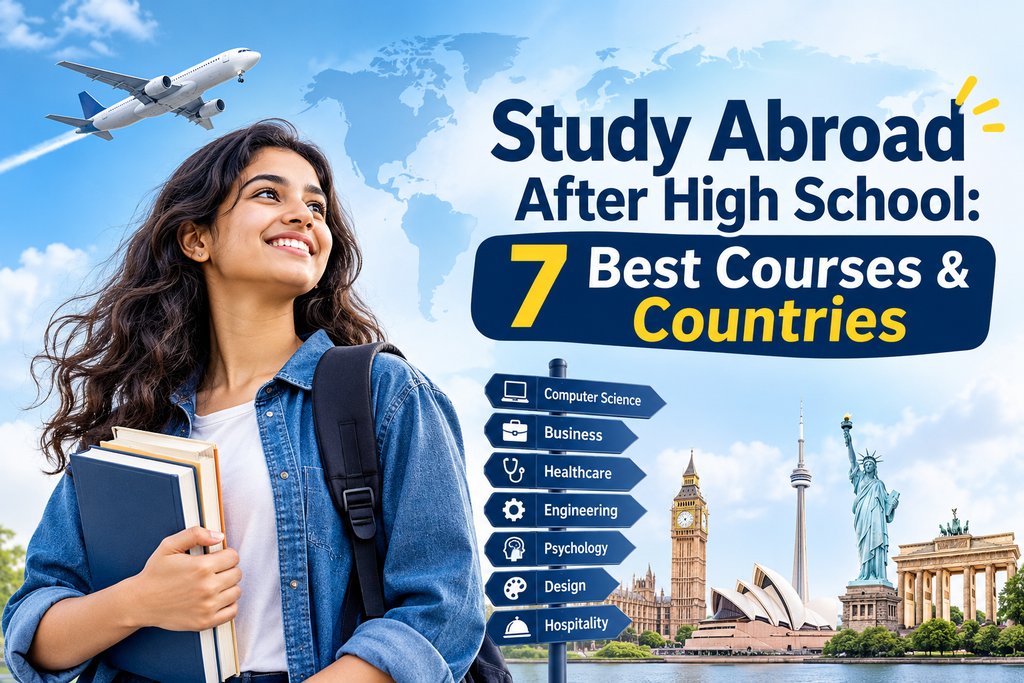
Completing high school is an exciting milestone, but deciding what comes next can feel overwhelming. For many students, studying abroad after high school offers an opportunity to explore new academic subjects, experience different cultures and develop skills for an international career.
However, choosing the right destination is not simply about finding a famous university. The course you select, your academic qualifications, tuition fees, scholarship opportunities and future career interests all deserve careful consideration.
If you are planning to study abroad after 12th grade, understanding your options before applying can make the entire process easier.
This guide explores seven popular undergraduate courses, six leading study destinations and the important factors Indian students should consider before making a decision.
1. What Are the Best Undergraduate Courses to Study Abroad After High School?
Your undergraduate degree should connect your interests with realistic career opportunities. Here are seven popular fields worth exploring.
1. Computer Science and Artificial Intelligence
Technology continues to influence industries worldwide. A Bachelor of Computer Science, Artificial Intelligence or Software Engineering can introduce students to programming, data structures, machine learning and software development.
Potential career paths: Software Developer, AI Engineer, Data Analyst and Cybersecurity Specialist.
2. Business and Management
Business degrees are suitable for students interested in entrepreneurship, finance, marketing and organisational management.
Popular options include:
- Bachelor of Business Administration (BBA)
- Bachelor of Commerce (BCom)
- International Business
- Marketing and Management
- Finance and Accounting
Potential career paths: Business Analyst, Marketing Executive, Financial Analyst and Management Trainee.
3. Nursing and Healthcare
Healthcare programmes attract students interested in patient care, medical services and public health. Undergraduate options include Nursing, Biomedical Science, Public Health and Health Sciences.
Remember that professional registration and clinical placement requirements differ between countries. Always check the relevant university and regulatory authority.
4. Engineering and Technology
Engineering offers opportunities to develop technical and problem-solving skills.
Popular undergraduate specialisations include:
- Mechanical Engineering
- Civil Engineering
- Electrical and Electronic Engineering
- Aerospace Engineering
- Mechatronics Engineering
5. Psychology and Social Sciences
Students interested in human behaviour, society and mental health can explore Psychology, Sociology and Social Sciences.
A bachelor’s degree can provide a foundation for further studies. Becoming a licensed psychologist generally requires additional recognised qualifications and supervised training.
6. Architecture and Design
Creative students can consider Architecture, Interior Design, Graphic Design and Product Design.
These programmes often combine theoretical learning with practical projects, portfolios and studio-based assessments. Architecture may also require professional accreditation and further study.
7. Hospitality and Tourism Management
Hospitality programmes focus on tourism, hotel operations, event management and international service industries.
Students can explore hotel management, tourism management and event management degrees, depending on their interests.
2. Best Countries to Study Abroad After 12th Grade
Choosing the right country is just as important as selecting the course. Each destination offers different academic structures, admission requirements and financial considerations.
United Kingdom – Globally Recognised Degrees
The UK is a popular destination for international undergraduate students. Universities offer programmes across business, engineering, healthcare, computer science and humanities.
Why consider the UK?
- Wide range of undergraduate programmes.
- Internationally recognised qualifications.
- Opportunities to explore different academic specialisations.
- Various university-based scholarship opportunities.
Students should check individual university entry requirements, English-language requirements and the official UK Student Visa guidelines.
Australia – Flexible Study Options
Australia offers undergraduate qualifications through universities and other recognised higher education providers. Students can explore programmes in engineering, nursing, business, information technology and science.
The Australian Government’s Study Australia Course Search helps students discover courses from registered education providers.
Key consideration: Compare tuition fees, course duration, location and entry requirements before selecting a university.
Canada – Diverse Academic Opportunities
Canada offers undergraduate programmes across a wide range of disciplines. Students can explore bachelor’s degrees and other post-secondary pathways depending on their academic background.
The official EduCanada website provides information about study programmes, education costs and scholarships.
Key consideration: Check the institution’s eligibility, admission requirements and current study permit rules before applying.
United States – Broad Academic Choices
The United States offers a diverse undergraduate education system. Many institutions allow students to explore different subjects before or alongside choosing a major.
Popular fields include computer science, business, engineering, economics and liberal arts.
According to EducationUSA, students should begin researching their options around 12–18 months before their intended academic year.
Germany – An Interesting Option for Academic Value
Germany attracts international students through its universities and varied academic programmes.
However, admission directly after Indian high school is not automatic. Eligibility depends on the school-leaving qualification, recognised university entrance qualifications and the programme selected.
The DAAD admission requirements database is a useful starting point for checking eligibility.
Ireland – A Growing Study Destination
Ireland offers undergraduate programmes in areas such as technology, business, science, healthcare and humanities.
Students should compare universities, course modules, tuition fees and entry requirements. Check official university websites and the relevant Irish immigration guidance before making a decision.
3. Five Important Things to Check Before Applying Abroad
Choosing a university based only on its reputation can lead to unnecessary expenses or unsuitable course selections.
Consider these five important factors:
1. Academic eligibility: Check whether your Class 12 qualification, subjects and marks meet the university’s requirements.
2. English-language proficiency: Universities may accept IELTS, PTE Academic or other approved evidence, depending on their policies and the destination’s rules.
3. Tuition fees and living costs: Calculate the complete estimated budget, including accommodation, food, transportation, insurance and other expenses.
4. Scholarships and financial support: Explore university scholarships, merit-based awards and other eligible funding opportunities. Always check deadlines and conditions.
5. Career relevance: Review course modules, practical learning, internship opportunities and professional accreditation where applicable.
4. How to Find the Right Undergraduate Course Abroad
Searching through multiple university websites can take considerable time, especially when comparing different countries and tuition fees.
This is where CourseFind can simplify your research.
With CourseFind’s course search platform, students can:
- Discover undergraduate programmes across international destinations.
- Explore courses by subject and country.
- Filter options by programme level and duration.
- Compare universities and available course information.
- Explore tuition fees, English-language requirements and scholarship information where listed.
Instead of limiting yourself to one university or destination, you can explore different possibilities and create a more informed shortlist.
Remember: Always confirm the latest fees, eligibility criteria, application deadlines and scholarship conditions directly with the relevant university before applying.
5. When Should You Start Planning to Study Abroad After High School?
Starting early gives you more time to research universities, prepare documents and meet application deadlines.
A practical planning timeline includes:
- 12 months before intake: Research countries, courses and universities.
- 9–10 months before intake: Check academic eligibility and English-language requirements.
- 6–8 months before intake: Prepare applications and explore scholarships.
- 3–5 months before intake: Review admission decisions, finances and visa requirements.
- Before departure: Complete the required enrolment, visa and travel arrangements.
Actual timelines vary by country, university and intake.
Frequently Asked Questions
1. Can Indian students study abroad immediately after Class 12?
Yes. Many international universities accept Indian students for undergraduate programmes after Class 12, subject to academic eligibility, subject prerequisites and English-language requirements.
2. Which country is best for undergraduate studies after 12th?
There is no single best country for everyone. The UK, Australia, Canada, USA, Germany and Ireland offer different academic and financial opportunities. Your choice should depend on your course, budget and career plans.
3. Is IELTS compulsory to study abroad after high school?
Not always. English-language requirements vary by university and country. Some institutions accept PTE Academic or alternative evidence, while others may offer exemptions under specific conditions.
4. Can I get scholarships for undergraduate courses abroad?
Yes. Some universities offer merit-based scholarships, entrance awards and other financial support. Eligibility and award amounts depend on the institution and programme.
5. How can I compare undergraduate courses in different countries?
You can use CourseFind to discover and compare international course options by subject, country, programme level and other available filters.
Final Thoughts
Studying abroad after high school can open doors to new academic experiences and international opportunities. But the right decision starts with understanding your interests, checking your eligibility and comparing courses carefully.
Do not choose a destination simply because it is popular. Focus on the programme that matches your ambitions, academic background and financial plans.
Your international education journey starts with one informed decision. Explore your possibilities with CourseFind and discover undergraduate courses around the world.