
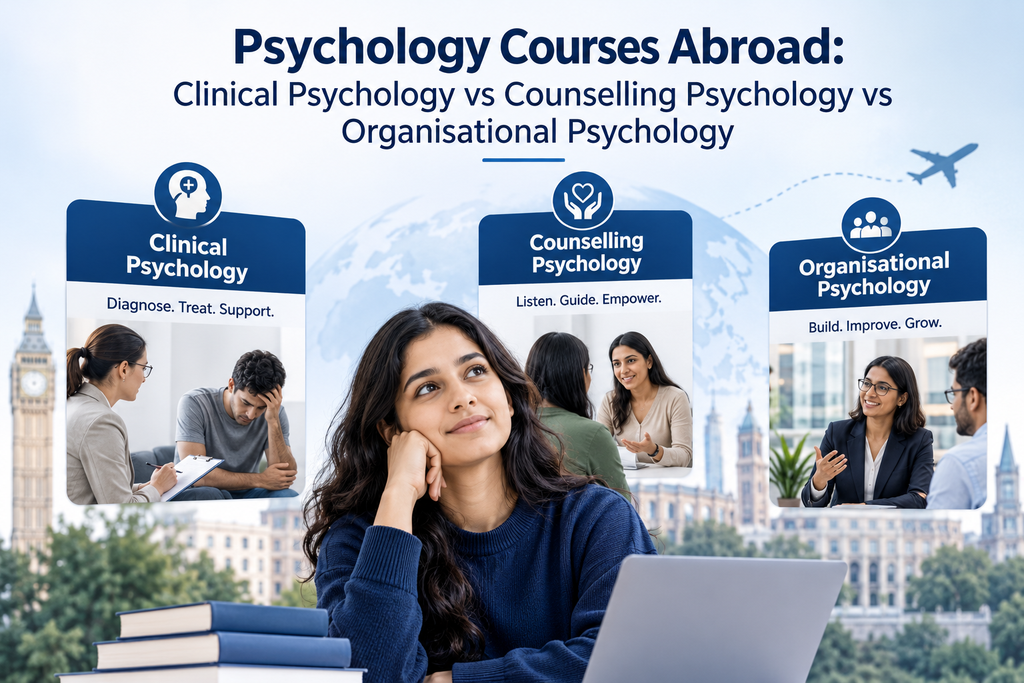
Psychology Courses Abroad offer students different academic and career pathways, depending on whether they are interested in mental health, emotional wellbeing or human behaviour in the workplace
Psychology is one of the most diverse fields of study, offering opportunities across healthcare, mental health services, education and business. However, choosing the right specialisation can be challenging for international students exploring psychology courses abroad.
Among the popular postgraduate options, Clinical Psychology, Counselling Psychology and Organisational Psychology offer three different approaches to understanding human behaviour. Although they share a foundation in psychology, their course structures, areas of study and career pathways are different.
Understanding these differences can help students select a Master’s programme that matches their academic background and future goals.
1. Clinical Psychology: Understanding and Treating Mental Health Conditions
Clinical Psychology focuses on understanding, assessing and addressing psychological difficulties and mental health conditions. Students explore how biological, emotional, social and environmental factors influence mental health.
What will you study?
Clinical Psychology programmes commonly cover:
- Psychological Assessment and Diagnosis
- Cognitive Behavioural Therapy (CBT)
- Abnormal Psychology
- Clinical Neuropsychology
- Psychological Research Methods
- Mental Health Interventions
Career opportunities: Depending on professional qualifications and registration, graduates may pursue pathways in clinical services, mental health research, healthcare institutions and related psychological services.
For example, the University of Southampton’s MSc Clinical Psychology offers a one-year programme covering therapeutic skills, CBT, research and clinical psychology principles for its September 2026 intake.
An important distinction: an academic MSc in Clinical Psychology does not automatically qualify an international student to practise as a licensed clinical psychologist. Professional training and registration requirements vary by country.
2. Counselling Psychology: Supporting Emotional and Personal Wellbeing
Counselling Psychology focuses on helping individuals understand emotional challenges, personal relationships, life transitions and behavioural difficulties.
Compared with Clinical Psychology, this specialisation places particular emphasis on personal development, wellbeing, adjustment and therapeutic relationships.
What will you study?
Common subject areas include:
- Counselling Theories and Approaches
- Psychotherapy
- Human Development
- Multicultural Counselling
- Psychological Assessment
- Therapeutic Communication
Career opportunities: Depending on the qualification and local professional requirements, potential pathways include counselling services, wellbeing organisations, educational settings and research.
The University of Queensland offers postgraduate pathways in Counselling Psychology and a separate Master of Counselling. Its programme information also illustrates how entry requirements differ between professional psychology and counselling pathways.
3. Organisational Psychology: Understanding Human Behaviour at Work
Organisational Psychology, also known as Industrial-Organisational Psychology in some countries, applies psychological principles to workplaces.
Instead of focusing primarily on individual mental health, it explores how employees, teams, managers and organisational environments influence workplace performance and wellbeing.
What will you study?
- Organisational Behaviour
- Employee Motivation and Engagement
- Leadership and Management
- Recruitment and Selection
- Workplace Wellbeing
- Organisational Development
Career opportunities: Graduates may explore careers in human resources, organisational development, talent management, employee assessment, workplace research and business consulting.
The University of Manchester’s MSc Organisational Psychology provides a postgraduate pathway with a BPS-accredited programme for eligible students. Its 2027 entry requirements specify a recognised psychology background and Graduate Basis for Chartered Membership eligibility.
Clinical vs Counselling vs Organisational Psychology: Key Differences
| Area | Clinical | Counselling | Organisational |
|---|---|---|---|
| Main focus | Mental health | Emotional wellbeing | Workplace behaviour |
| Study area | Assessment and interventions | Counselling and therapy | Leadership and employee behaviour |
| Work settings | Healthcare | Counselling services | Businesses and organisations |
| Career direction | Clinical services | Counselling services | HR and organisational development |
How to Choose the Right Psychology Course Abroad?
Before selecting a postgraduate programme, international students should consider these factors:
- Academic eligibility: Check whether your Bachelor’s degree in Psychology meets the programme’s entry requirements. Some courses require an honours degree or specific psychology credits.
- Course curriculum: Compare modules, research components and practical training opportunities.
- Professional accreditation: Check whether the programme is recognised by relevant professional or regulatory bodies in your intended country of practice.
- Career objectives: Choose a specialisation based on whether you are interested in mental healthcare, counselling or workplace psychology.
- Tuition fees and duration: Compare university fees, course length and available scholarships before applying.
For UK-based professional psychology pathways, the Health and Care Professions Council (HCPC) explains registration standards and protected professional titles. International students should also check the relevant country’s regulations before choosing a course.
Find the Right Psychology Courses Abroad with CourseFind.app
Choosing between Clinical, Counselling and Organisational Psychology is an important academic decision. The right programme depends on your previous education, interests and long-term career plans.
Instead of exploring university websites individually, students can use CourseFind.app to discover and compare international university programmes, explore tuition fees and identify available scholarship opportunities.
Start exploring psychology programmes and find a course that matches your academic goals.
Explore Psychology Courses Abroad with CourseFind.app.
Sources and references
All the following references are from universities or official government/regulatory sources.